
8 stories
·
0 followers

Combat Rescue Aircraft, Tankers Arrive In Caribbean As U.S. Military Buildup Accelerates

1 Comment

The Pentagon is continuing to rapidly add military capabilities to Operation Southern Spear, a mission that began as a counter-narcotics effort but is increasingly aimed at Venezuelan dictator Nicolas Maduro. Images emerged online today of Combat Search and Rescue (CSAR) aircraft having arrived in Puerto Rico. In addition, KC-135 Stratotanker aerial refuelers are now flying missions out of the Dominican Republic. We also found that KC-46 Pegasus tankers have been flying sorties out of the U.S. Virgin Islands for months, with a major ramp-up in activity in recent weeks. This is all on top of yesterday’s arrival of EA-18G Growler electronic attack jets in Puerto Rick and the news we broke today that USAF F-35As are being sent to the Caribbean, as well.

Clearly, the Pentagon is moving into a posture in the region that is much better equipped for tactical air combat operations over hostile territory than it was just days ago.

Despite all this movement, White House spokesperson Karoline Leavitt told reporters Thursday afternoon that U.S. President Donald Trump does not want to see a protracted conflict in Venezuela.

“A prolonged war is something the president is not interested in,” she said, adding that Trump wants to “see the end of illegal drugs trafficked into the United States.”

White House:

Trump is not interested in a prolonged war in Venezuela. pic.twitter.com/wsyj2uVFRs

— Clash Report (@clashreport) December 11, 2025

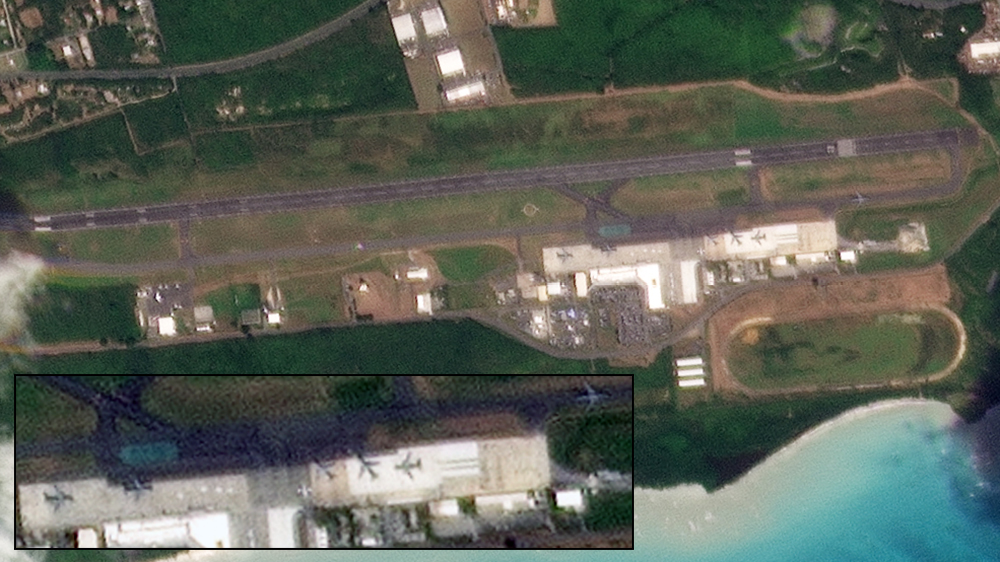
On Thursday, Reuters published photos showing HC-130J Combat King II combat search and rescue (CSAR) planes and HH-60W Jolly Green Giant II CSAR helicopters on the ramp at Roosevelt Roads, the former U.S. Navy facility in Puerto Rico. These aircraft are stationed at Moody Air Force Base in Georgia, though the helicopters reportedly arrived from deployment to Kadena Air Base in Japan.

A Reuters image from today (11 Dec) shows 3x USAF HC-130Js from Moody AFB on the ramp at Roosevelt Roads in Puerto Rico.

Credit: Ricardo Arduengo/Reuters. pic.twitter.com/oAV7VEp9yn

— LatAmMilMovements (@LatAmMilMVMTs) December 11, 2025

RCH575's cargo was USAF HH-60Ws from Kadena Air Base in Japan.

Credit: Ricardo Arduengo/Reuters. https://t.co/sZKrr5fW9L pic.twitter.com/58ibWbFbzr

— LatAmMilMovements (@LatAmMilMVMTs) December 11, 2025

The deployment of dedicated CSAR aircraft to the region is a sign that the Trump administration could be about to drastically increase its pressure on Maduro and go after the cartels inland with strikes. The aircraft are needed for rapid rescues of any aircrews that are lost during military operations, specifically over contested territory. While the Marine aviation force from USS Iwo Jima and its escorts are also capable of this mission, as are helicopters from the USS Gerald R. Ford, to varying degrees, the unique capabilities and the highly specialized crews the HC-130J and HH-60W bring to the table are prized. This is especially true now that USAF tactical airpower in the form of F-35As is about to arrive in-theater.

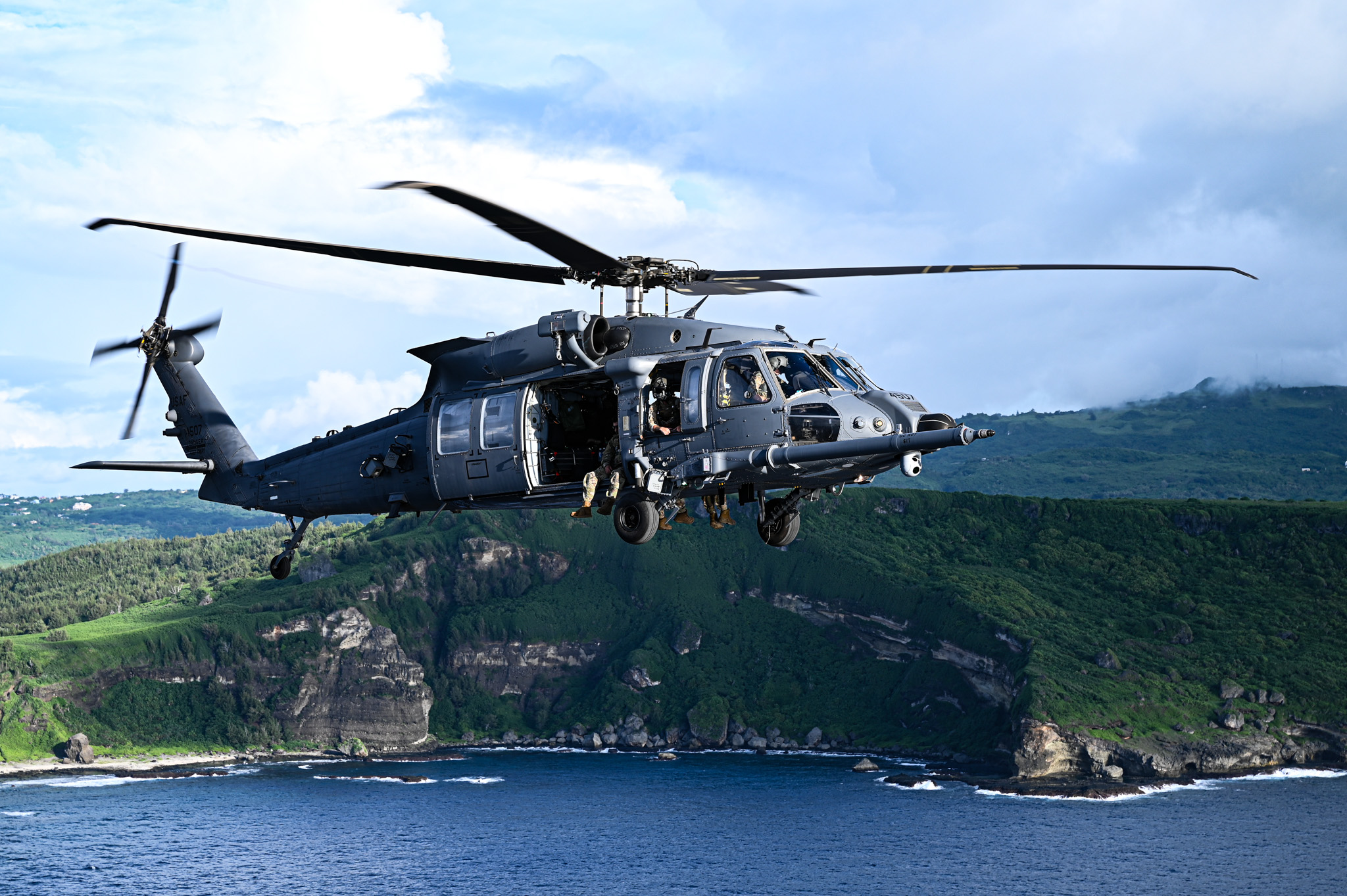
A U.S. Air Force HH-60W Jolly Green II helicopter from the 563rd Rescue Group flies ahead of the Liberation Day celebration during exercise Resolute Force Pacific in Rota, Northern Mariana Islands, July 20, 2025. REFORPAC is part of the first-in-a-generation Department-Level Exercise series, employing more than 400 Joint and coalition aircraft and more than 12,000 members at more than 50 locations across 3,000 miles. (U.S. Air Force photo by Senior Airman Andrew Garavito)
A U.S. Air Force HH-60W Jolly Green II (U.S. Air Force photo by Senior Airman Andrew Garavito) Senior Airman Andrew Garavito

The Stratotankers arrived in the Dominican Republic sometime around Sunday or Monday, according to the @LatAmMilMovements X account, an open-source tracker who has been closely following these deployments. They are now taking up a good portion of an entire runway at the airport.

A Sentinel-2 pass from today (10 Dec) shows a total of six USAF KC-135s at Aeropuerto Internacional Las Américas (SDQ/MDSD) in the Dominican Republic.

From here, the tankers will continue to support E-3G and RC-135 missions in the Caribbean.

Work w/ @MikeRomeoAv. pic.twitter.com/tzJ8PNhqdD

— LatAmMilMovements (@LatAmMilMVMTs) December 10, 2025

Forward deploying the tankers reduces the amount of time needed to fly to the region and thus increases time on station and sortie rates. The presence of these jets in the Dominican Republic also represents a widening of the mission’s footprint, a U.S. official told us. The bulk of U.S. land-based operations are run out of Puerto Rico, and Roosevelt Roads in particular.

Noted parked up at Santo Domingo Airport ( SDQ ) in the Dominican Republic today, 6 Boeing KC135 refueling aircraft of the United States Air Force pic.twitter.com/U4bnLhhFIQ

— Michael Kelly (@Michaelkelly707) December 11, 2025

“This is an expansion of Southern Spear,” the U.S. official said of the Stratotanker presence in the Dominican Republic. “This is about capabilities and location. In case of any service support needed, you want to have that in a strategic area. The Dominican Republic is not too close, not too far and they have the capabilities to support a number of aircraft.”

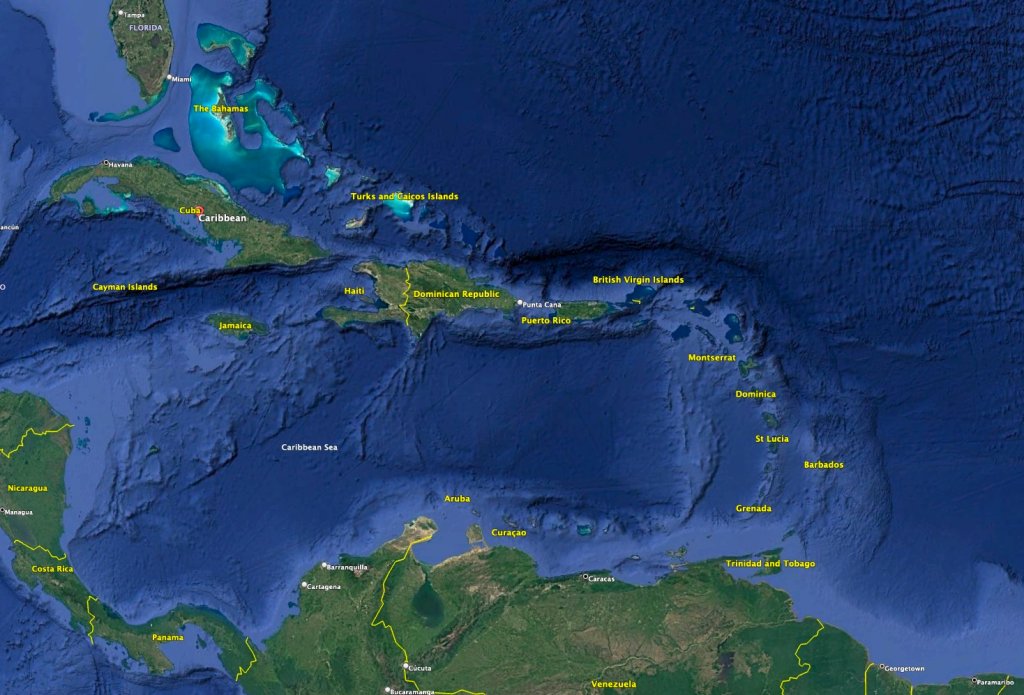
The Dominican Republic is strategically located in the northern Caribbean. (Google Earth)

The Dominican Republic presence, however, was not the first tankers operating forward in the region. They have been operating out of the U.S. Virgin Islands for months.

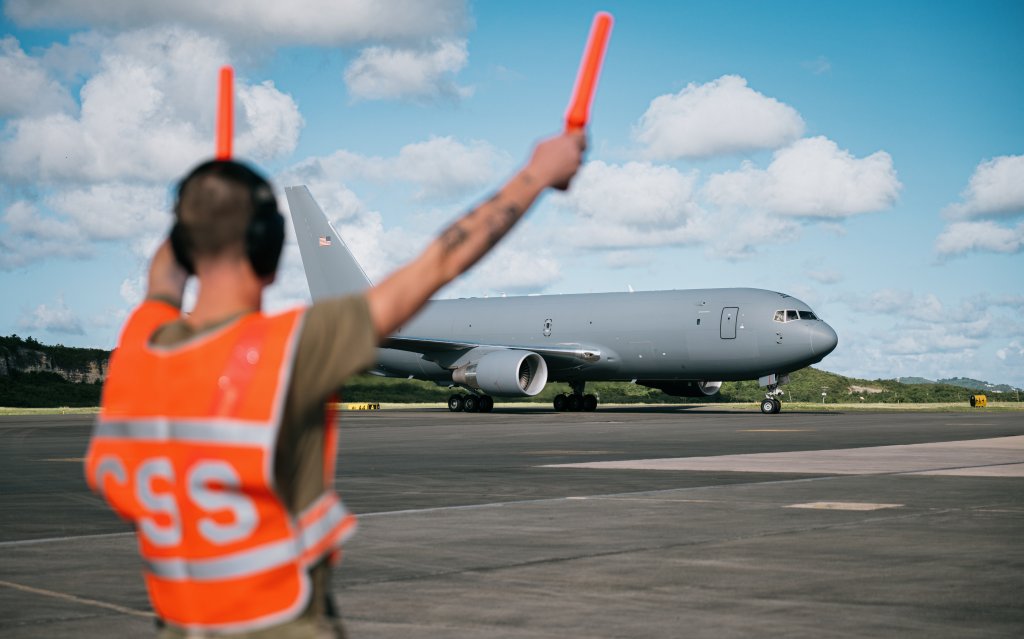
A U.S. Air Force airfield manager assigned to the 6th Expeditionary Air Refueling Squadron marshals a KC-46A Pegasus on the flight line in Frederiksted, St. Croix, Oct. 29, 2025. U.S. military forces are deployed to the Caribbean in support of the U.S. Southern Command mission, Department of War-directed operations, and the president’s priorities to disrupt illicit drug trafficking and protect the homeland. (U.S. Air Force photo)
A U.S. Air Force airfield manager assigned to the 6th Expeditionary Air Refueling Squadron marshals a KC-46A Pegasus on the flight line in Frederiksted, St. Croix, Oct. 29, 2025. (U.S. Air Force photo) Senior Airman Katelynn Jackson

The KC-46s have been in the U.S. Virgin Islands since the middle of September, according to archived satellite imagery. This presence has grown steadily with now between five and six tankers being seen on the ramp there at any given time. The low-resolution satellite photo below was taken Dec. 9 and obtained by The War Zone via Planet Labs.

Four or five KC-46 Pegaus aerial refueling tankers in the U.S. Virgin Islands in a satellite image taken Dec. 9. (PHOTO © 2025 PLANET LABS INC. ALL RIGHTS RESERVED. REPRINTED BY PERMISSION)

As the relatively sudden surge of assets to the Caribbean continues, the world waits to see what the Trump Administration plans to do with all of it.

Contact the author: howard@thewarzone.com

The post Combat Rescue Aircraft, Tankers Arrive In Caribbean As U.S. Military Buildup Accelerates appeared first on The War Zone.


Read the whole story
LadyStrawberries
54 minutes ago
reply
Looks like we're in for one of those famous "special military operations"
Share this story
Delete

Website Task Flowchart

5 Comments and 10 Shares
Tired of waiting on hold? Use our website to chat with one of our live agents, who are available to produce words at you 24/7!
Read the whole story
LadyStrawberries
1 hour ago
reply
I swear to god if I see one more conversational interface today. It's even worse when this applies to real institutions
Share this story
Delete
4 public comments
DGA51
9 days ago
reply
Reality
Central Pennsyltucky
jlvanderzwan
10 days ago
reply
Was todays xkcd written by 100R?
macr0t0r
10 days ago
reply
That's a perfect description of AI chat agents: "who are available to produce words at you 24/7"
alt_text_bot
10 days ago
reply
Tired of waiting on hold? Use our website to chat with one of our live agents, who are available to produce words at you 24/7!

Meta shuts down global accounts linked to abortion advice and queer content | Global development | The Guardian

1 Comment and 2 Shares

Meta has removed or restricted dozens of accounts belonging to abortion access providers, queer groups and reproductive health organisations in the past weeks in what campaigners call one of the “biggest waves of censorship” on its platforms in years.

The takedowns and restrictions began in October and targeted the Facebook, Instagram and WhatsApp accounts of more than 50 organisations worldwide, some serving tens of thousands of people – in what appears to be a growing push by Meta to limit reproductive health and queer content across its platforms. Many of these were from Europe and the UK, however the bans also affected groups serving women in Asia, Latin America and the Middle East.

Repro Uncensored, an NGO tracking digital censorship against movements focused on gender, health and justice, said that it had tracked 210 incidents of account removals and severe restrictions affecting these groups this year, compared with 81 last year.

Meta denied an escalating trend of censorship. “Every organisation and individual on our platforms is subject to the same set of rules, and any claims of enforcement based on group affiliation or advocacy are baseless,” it said in a statement, adding that its policies on abortion-related content had not changed.

In a recent purge queer and sex-positive accounts were banned. Photograph: Courtesy of Repro Uncensored

Campaigners say the actions indicate that Meta is taking its Trump-era approach to women’s health and LGBTQ+ issues global. Earlier this year, it appeared to “shadow-ban” or remove the accounts of organisations on Instagram or Facebook helping Americans to find abortion pills. Shadow-banning is when a social media platform severely restricts the visibility of a user’s content without telling the user.

In this latest purge, it blocked abortion hotlines in countries where abortion is legal, banned queer and sex-positive accounts in Europe, and removed posts with even non-explicit, cartoon depictions of nudity.

“Within this last year, especially since the new US presidency, we have seen a definite increase in accounts being taken down – not only in the US, but also worldwide as a ripple effect,” said Martha Dimitratou, executive director of Repro Uncensored.

US president Donald Trump jokes with Meta CEO Mark Zuckerberg, left, as he hosts tech leaders for a dinner in the state dining room of the White House in Washington DC in September 2025. Photograph: Saul Loeb/AFP/Getty Images

“This has been, to my knowledge, at least one of the biggest waves of censorship we are seeing,” she said.


Campaigners have accused Meta of being condescending and unresponsive, with the company offering only vague reasons why certain accounts were taken down – and appearing unwilling to engage.

In one email shared with the Guardian, a Meta consultant appears to invite a number of reproductive health organisations to a closed-door online briefing about “the challenges that you are facing with Meta’s content moderation policies”.

The email says the meeting “will not be an opportunity to raise critiques of Meta’s practices or to offer recommendations for policy changes”.

Dimitratou said such closed-door meetings had happened before, saying they “reinforce the power imbalance that allows big tech to decide whose voices are amplified and whose are silenced”.

In another instance, a Meta employee counselled an affected organisation in a personal message to simply move away from the platform entirely and start a mailing list, saying that bans were likely to continue. Meta said it did not send this message.

Meta’s recent takedowns are part of a broader pattern of the company purging accounts, and then – at times – appearing to backtrack after public pressure, said Carolina Are, a fellow at Northumbria University’s Centre for Digital Citizens.

“It wouldn’t be as much of a problem if platforms’ appeals actually worked, but they don’t. And appeals are the basis of any democratic justice system,” she added.

Meta said that it aimed to reduce enforcement mistakes against accounts on its platform, but added that the appeals process for banned accounts had become frustratingly slow.

Organisations affected by the bans include Netherlands-registered Women Help Women, a nonprofit offering information about abortion to women worldwide, including in Brazil, the Philippines and Poland. It fields about 150,000 emails from women each year, said its executive director, Kinga Jelinska.

The feminist group Women Help Women had their page banned by Meta in November, but it has since been reinstated. Photograph: Courtesy of Repro Uncensored

Women Help Women has been on Facebook for 11 years, said Jelinska, and while its account had been suspended before, this was the first time it was banned outright. The ban could be “life-threatening”, she said, pushing some women towards dangerous, less reliable information sources. Little explanation was given for the ban.

A message from Meta to the group dated 13 November said its page “does not follow our Community Standards on prescription drugs”, adding: “We know this is disappointing, but we want to keep Facebook safe and welcoming for everyone.”

“It’s a very laconic explanation, a feeling of opacity,” Jelinska said. “They just removed it. That’s it. We don’t even know which post it was about.”

Meta said more than half of the accounts flagged by Repro Uncensored have been reinstated, including Women Help Women which it said was taken down in error. “The disabled accounts were correctly removed for violating a variety of our policies including our Human Exploitation policy,” it added.

Jacarandas was founded by a group of young feminists when abortion was decriminalised in Colombia in 2022, to advise women and girls on how to get a free, legal abortion. The group’s executive director, Viviana Monsalve, said its WhatsApp helpline had been blocked then reinstated three times since October. The WhatsApp account is currently banned and Monsalve said they had received little information from Meta about whether this would continue.

“We wrote [Meta] an email and said, ‘hey, we are a feminist organisation. We work in abortion. Abortion is allowed in Colombia up to 24 weeks. It’s allowed to give information about it,’” said Monsalve.

Without Meta’s cooperation, Monsalve said it was difficult to plan for the future. “You are not sure if [a ban] will happen tomorrow or after tomorrow, because they didn’t answer anything.”

Meta said: “Our policies and enforcement regarding abortion medication-related content have not changed: we allow posts and ads promoting healthcare services like abortion, as well as discussion and debate around them, as long as they follow our policies.”

While groups such as Jacarandas and Women Help Women had their accounts removed outright, other groups said that they increasingly faced Meta restricting their posts and shadow-banning their content.

Fatma Ibrahim, the director of the Sex Talk Arabic, a UK-based platform which offers Arabic-language content on sexual and reproductive health, said that the organisation had received a message almost every week from Meta over the past year saying that its page “didn’t follow the rules” and would not be suggested to other people, based on posts related to sexuality and sexual health.

An Instagram post from The Sex Talk Arabic that triggered a nudity warning and was removed by Meta. Photograph: Courtesy of Thesextalkarabic

Two weeks ago, these messages escalated to a warning, in which Meta noted its new policies on nudity and removed a post from the Sex Talk Arabic’s page. The offending post was an artistic depiction of a naked couple, obscured by hearts.

Ibrahim said the warning was “condescending”, and that Meta’s moderation was US-centric and lacked context.

“Despite the profits they make from our region, they don’t invest enough to understand the social issues women fight against and why we use social media platforms for such fights,” she said.

Read the whole story
LadyStrawberries
1 hour ago
reply
A reminder facebook isn't your friend
Share this story
Delete

State Library of Victoria scraps restructure plan after outrage from famous writers and public

1 Comment

Proposal to cut jobs and refocus on ‘digital experiences’ attracted ire of writers including Helen Garner and Nick Cave

The State Library of Victoria has scrapped a controversial restructure proposal after a public outcry, saying it had “created unintended concerns”.

Many of Australia’s most prominent writers, researchers and artists, along with thousands of members of the public, had expressed outrage over the proposal to cut 39 jobs and refocus the 171-year-old institution – and Australia’s oldest public library – on tourist-oriented “digital experiences”.

Continue reading...
Read the whole story
LadyStrawberries
1 hour ago
reply
Awesome news
Share this story
Delete

Tracking the US build-up in the Caribbean

1 Share
Planet Labs/Sentinel-2/The Conversation, CC BY-SA

➡️ Click here to view the interactive visual feature mapping the US military in the Caribbean

The Conversation

The authors do not work for, consult, own shares in or receive funding from any company or organisation that would benefit from this article, and have disclosed no relevant affiliations beyond their academic appointment.

Read the whole story
LadyStrawberries
1 hour ago
reply
Share this story
Delete

Melbourne's West Gate Tunnel 'ready to take cars from Sunday'

1 Comment
After being plagued by cost blowouts and delays, Melbourne's West Gate Tunnel will be ready to take motor vehicles from Sunday, say multiple sources.


Read the whole story
LadyStrawberries
2 hours ago
reply
Imagine the shitstorm over the blowout if this was a rail project
Share this story
Delete
Next Page of Stories